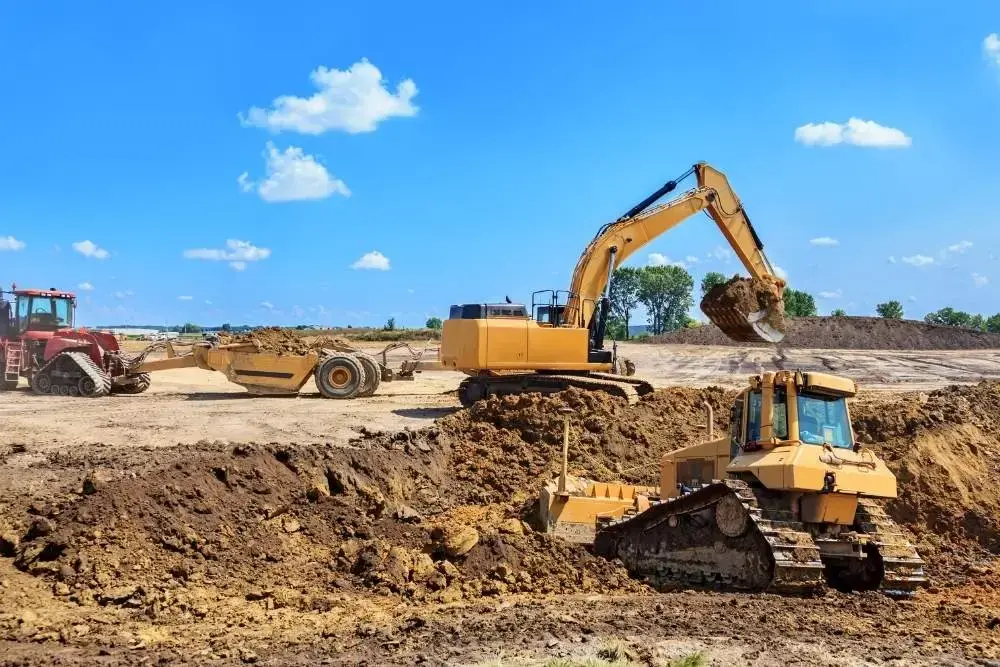
You might have been around construction for years. Or you might be looking at the industry for the first time.
Either way, an earthmoving course in Victoria gives you a clear way to learn real skills, understand modern machinery, and move toward reliable work in civil construction.
Whether you want to operate excavators, loaders, rollers, or other plant, training gives you the confidence to handle machines safely and the knowledge to work on active sites without guesswork.
Below are the five main reasons to study earthmoving this year, and how the right training provider helps you turn interest into action.
1. Build real skills with hands-on training
Earthmoving isn’t something you can learn from a manual. You need time on the machines. You need repetition. And you need trainers who can guide you while you build confidence behind the controls.
A course gives you structured practice, so you pick up:
- Basic operational skills
- Pre-start checks
- Safety steps
- How to work around other plant
- How to communicate on site
- How to judge ground conditions
- How to handle machinery in tight spots
You don’t need to arrive with experience. Many early-career learners start here, while others come in from trades or labouring and want a better footing in plant operation.
See what you’ll cover on a typical course
Most earthmoving programs include a mix of theory and lots of practical hours. You work through tasks involving loading, trenching, backfilling, compacting, lifting, and controlled operations.
Training is delivered with clear steps and demonstrations, so you’re not left wondering what to do next. By the end, you understand how the equipment behaves and how to work safely on real sites.
2. Open doors to steady, in-demand work
Civil construction projects continue across Victoria. Roads, drainage, subdivisions, commercial builds, and council projects all need trained operators who can work safely and follow site instructions.
If you want an idea of what new and experienced operators typically earn, and how pay grows as you gain more time on site, CTI has you covered.
For many learners, this is the turning point: you can see a path into a job that pays reliably and has room to grow.
3. Train in Victoria with supportive, job-ready pathways
Some people want training that helps them move toward work quickly. Others want to stack earthmoving with other qualifications so they can build a broader career in civil construction.
We have a guide that outlines how training connects with employability skills and work-readiness. If you’re aiming to work sooner rather than later, this page is a solid place to start.
How this sets you up for work faster
You get:
- Clear training steps
- Practical support
- Site expectations explained in everyday language
- A pathway where skills build on each other
This helps new entrants step into the industry with a better sense of what employers expect and how to handle the busy environment of a civil site.
4. Learn from an RTO that understands civil construction
It helps to train with an RTO that is actually active in construction, not just ticking boxes.
CTI has delivered construction training in Victoria since 1995 and is a Registered Training Organisation (RTO 7107). Trainers have years of on-site experience, and the team is used to helping learners who are nervous, rusty, or brand new to the industry.
This is important because earthmoving work is practical, fast-paced, and safety-focused. Training that’s too theoretical or distant from real sites won’t give you the confidence you need. You want people who’ve been around the work, understand the machinery, and know how to teach it clearly.
5. Get a clear next step into a growing industry
Earthmoving roles often act as the first step into a longer civil construction career. Once you’re on site and building hours on different machines, you can work your way toward:
- More plant tickets
- Site leadership roles
- Civil drainage
- Road construction
- Pipelaying
- General plant operations
- Entry pathways into larger commercial or council projects
Who signs up for earthmoving courses?
It varies. You’ll see:
- People moving out of labouring roles
- School leavers who prefer practical work
- Workers coming from other trades
- People returning to the workforce
- Machinery hobbyists who want to turn interest into a job
The industry attracts a wide range of people because the work is steady, hands-on, and has room for growth as long as you stay reliable and safety focused.
If you want straightforward answers about dates, enrolment, or course details, CTI can talk you through the options.
FAQs About earthmoving courses in Victoria
What machines do you usually learn to operate in an earthmoving course?
Most courses cover excavators, loaders, rollers, and related plant used on civil sites. You learn basic controls, pre-starts, safety systems, and core tasks like trenching, loading, and compacting.
Do you need experience to enrol?
No. Many learners start with no operating experience. Trainers guide you through the basics and give you enough practice to build skill and confidence.
How long does it take to become job-ready?
It depends on your starting point. A course gives you the basics. From there, supervised hours on site help you settle into real conditions. CTI’s job-ready pathways explain how this progression works in Victoria.